
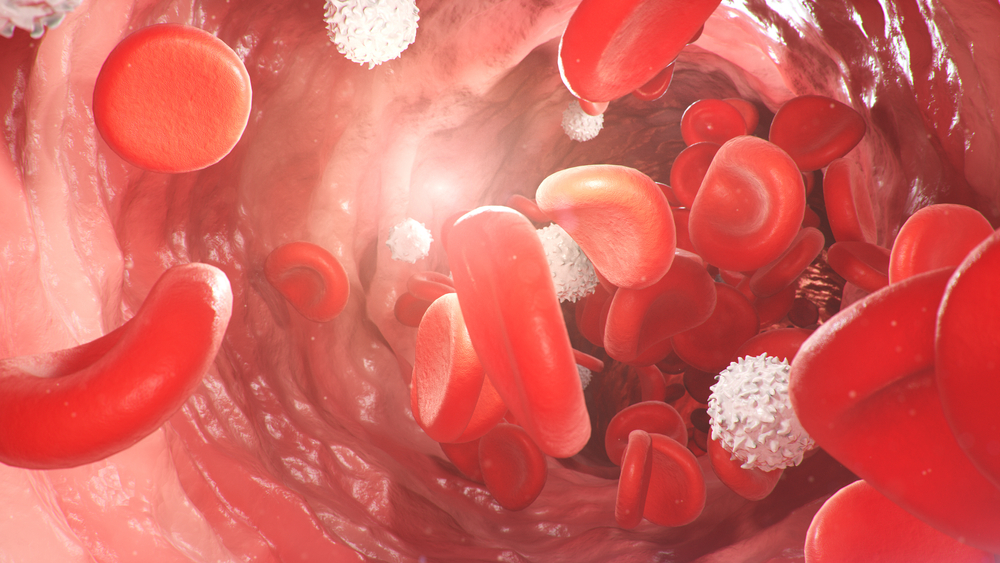
A blood film, also called a peripheral blood smear, is a test in which a sample of your blood is spread thinly on a glass slide, stained with special dyes and examined under a microscope by a scientist and/or haematologist (pathologist).
It is often ordered after the results of a full blood count (FBC) are found to be abnormal. The FBC is a group of tests that are routinely used to assess someone’s general health or to check for a variety of disorders that affect blood cells.
The FBC is performed on laboratory analysers, an instrument that automatically count the different components of blood (red blood cells, white blood cells and platelets). These instruments are a quick way to identify any unusual cells or cell numbers, but they cannot provide any more information. A blood film is able to give additional information that the automated instruments cannot always detect. It allows a closer look at the appearance of the blood cells, such as size, shape and colour.
Your doctors may also request a blood film when anaemia is suspected, or your symptoms suggest haemolysis – this is when your red blood cells are being destroyed.
A blood film may also be needed if you are being investigated for a blood or bone marrow cancer, if you have an infection or inflammatory disease, if you have clotting problems or to monitor your blood if you have been diagnosed with a blood disorder.
What is your blood made of?
Your blood is made up of Red Blood Cells (RBCs), White blood Cels (WBCs) and platelets. These float in fluid called plasma.

To stay healthy, your body must make new blood cells to replace those that age and degrade or are lost through bleeding.
Blood cells are continually being renewed. New cells are produced in the bone marrow, the soft fibrous tissue inside many bones and then released into your blood stream.
Blood cells develop from stem cells and mature within the bone marrow until they are released into the blood. Red cells live for about 120 days, platelets live for about six days, and the lifespan of white blood cells depend on the type – most last for only a few hours although some last for many years.

For more on the blood see Full Blood Count (FBC).
What does a blood film look for?
Red blood cells (RBC)
RBCs are the most common type of blood cell – they make up almost half of your blood - and they play an essential role in carrying oxygen to the cells in your body. Red blood cells can carry oxygen because they contain haemoglobin, the red protein that gives RBCs their colour. If your haemoglobin levels are low, or if you have too few RBCs, your body will not be able to get enough oxygen, causing fatigue and weakness.
A blood film looks at:
This helps diagnose types of anaemia, haemolysis, nutritional deficiencies and bone marrow problems.
For more on red blood cells and how they are made see: red cell count, red cell indices, reticulocytes, haemoglobin, and haematocrit.
White blood cells (WBC)
If you have an infection or inflammation somewhere in your body, your white cell production goes up. WBCs, or leukocytes, are your body’s defence against anything entering your body that can cause harm. They fight infection, help create immunity, and clean up damaged cells. WBCs are released from the bone marrow in higher amounts than normal when an infection is detected by the body. They travel in the blood to the site of infection and when they have completed their task, bone marrow production returns to normal levels.
There are five types of WBCs all with different functions. A blood film looks at:
This helps diagnose Infections, blood cancers, leukemias and bone marrow disorders.
For more on white blood cells see: white cell count, WBC differential.
Platelets
Platelets are tiny plate-shaped cells that circulate in your blood. They bind together to form clots when blood vessels are injured. These clots create a temporary plug in broken blood vessels to stop bleeding.
When they become activated, they change their shape by growing long tentacles and stick to each other. Platelets also release chemicals to attract more platelets and other cells, setting off the next step in what is called the coagulation cascade.
A blood film looks at:
This helps diagnose bleeding disorders, immune thrombocytopenia (ITP), and bone marrow failure.
For more on platelets and blood clotting see platelet count, prothrombin time (Internationalised normalised ratio), coagulation (blood clotting) factors.
Sample
Blood.
Preparation
None. If you have had a recent blood transfusion this may affect your results.
Reading your test report
Your results will be presented along with any other tests your doctor ordered on the same form. You will see separate columns or lines for each of these tests. Your results may be flagged as high (H) or low (L).
What does the result mean?
Findings from the blood film test are not always diagnostic in themselves and more often indicate the presence of an underlying condition, its severity and direct any further diagnostic testing that may be required.
| Type of cell | Possible results and what they may mean |
| RBC (Red blood cells) | Normal, mature red blood cells are uniform in size (7 µm) and do not have a nucleus (a sac in the centre of the cell that contains your DNA) as most other cells do. They are round and flattened like a doughnut with a depression in the middle instead of a hole. Due to the haemoglobin inside the RBCs, they appear pink to red in colour with a pale centre. While not every RBC will be perfect, any significant number of cells that are different in shape or size may indicate a problem. There may be one or more irregularities present and may include:
|
| WBC (White Blood Cells) | White blood cells have a nucleus surrounded by a jelly-like fluid called cytoplasm. All WBCs start as bone marrow stem cells. When developing in the marrow, they develop into one of two types of cells: myelocytic and lymphoid cells. They then mature into five distinct types of WBCs.
|
| Platelets | These are cell fragments that start in the bone marrow as large cells called megakaryocytes. When they are released into the bloodstream they appear as fragments. When there is bleeding, platelets become activated and begin to clump together to form a blood clot. You must have enough platelets to control bleeding but not too many to increase clotting. Platelets are counted as part of a FBC but if the result is high or low a blood film will be needed to investigate any anomalies in shape, size or granularity. |
| Sizes of blood cells are given in micrometres abbreviated to µm. | |
Reference intervals - comparing your results to the healthy population
Your results will be compared to reference intervals (sometimes called a normal range).
If your results are flagged as high or low this does not necessarily mean that anything is wrong. It depends on your personal situation.
The choice of tests your doctor makes will be based on your medical history and symptoms. It is important that you tell them everything you think might help.
You play a central role in making sure your test results are accurate. Do everything you can to make sure the information you provide is correct and follow instructions closely.
Talk to your doctor about any medications you are taking. Find out if you need to fast or stop any particular foods or supplements, as these may affect your results. Ask:
Pathology and diagnostic imaging reports can be added to your My Health Record. You and your healthcare provider can now access your results whenever and wherever needed.
Get further trustworthy health information and advice from healthdirect.